Finding the Voice: AI Speech Synthesis, Cloning, and the Ethics of Sound
 AI-Generated ImageAI-Generated Image
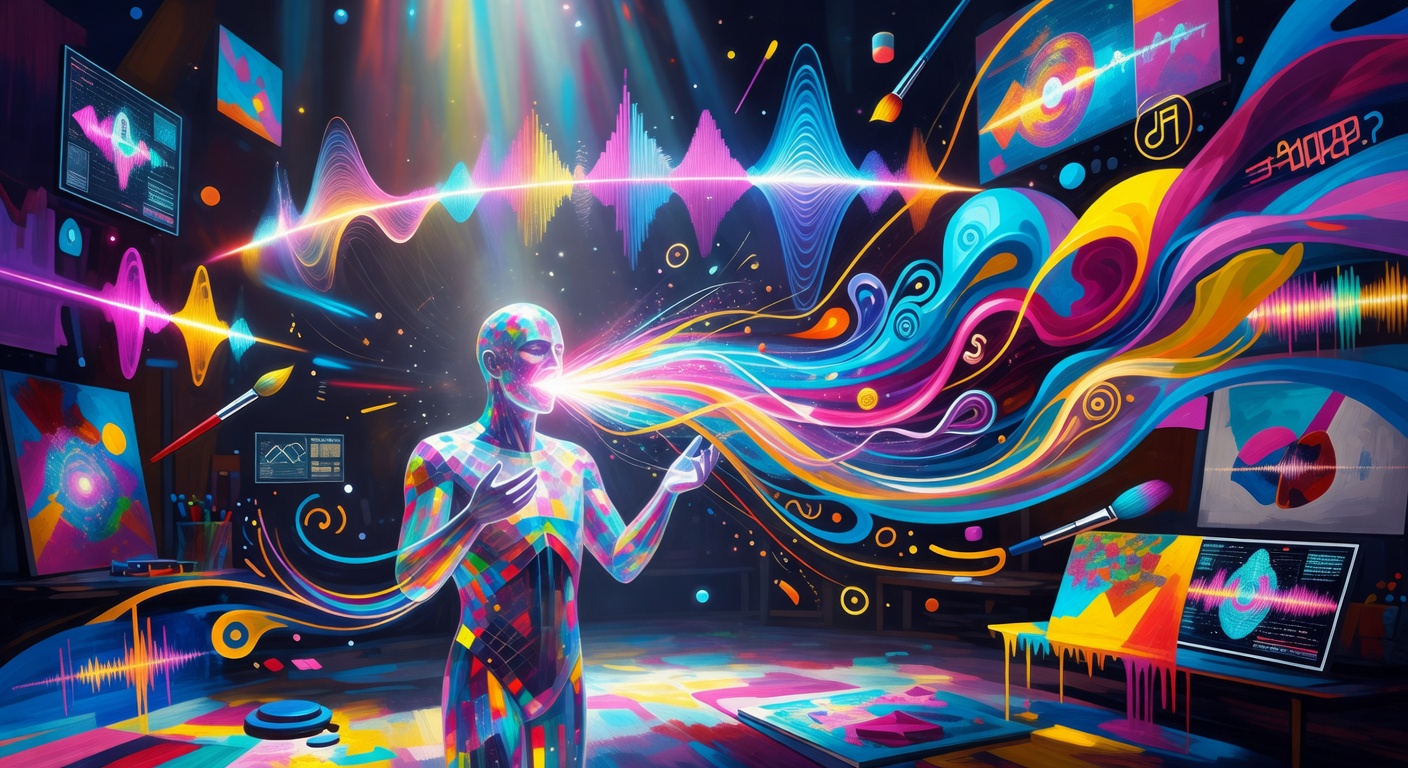
 The human voice is the most personal of instruments. It carries identity as surely as a fingerprint — not just the words spoken but the timbre, the rhythm, the accent, the emotional coloring that makes each voice unique. Artificial intelligence has learned to synthesize, clone, and transform the human voice with a fidelity that crosses into uncanny territory. The implications — for accessibility, creativity, communication, and security — are as profound as they are complicated.
AI voice technology encompasses several distinct capabilities: text-to-speech synthesis (generating spoken audio from written text), voice cloning (replicating a specific person’s voice from a small sample of their speech), voice conversion (transforming one person’s speech to sound like another), speech recognition (converting spoken words to text), and conversational AI (systems that engage in spoken dialogue). Each capability raises its own set of possibilities and concerns.
Modern Text-to-Speech
Text-to-speech has evolved from the robotic monotone of early synthesizers to remarkably natural speech that captures not just correct pronunciation but appropriate intonation, emphasis, pacing, and emotional expression. Modern TTS systems can read text with the cadence of a professional narrator, adjusting their delivery based on the content — pausing at appropriate moments, emphasizing key words, and conveying emotional tone that matches the text’s meaning.
The naturalness of modern TTS has practical implications that extend far beyond convenience. Audiobook production, traditionally requiring hours of studio time with professional narrators, can now be accomplished with TTS systems that produce acceptable quality for many applications. Accessibility for visually impaired users is dramatically improved by TTS that sounds natural rather than mechanical. Language learning benefits from TTS that accurately models pronunciation, stress patterns, and natural speech rhythm.
The quality gap between AI-generated speech and human narration is narrowing but has not closed. Professional voice actors bring interpretive skills — the ability to inhabit a character, to convey subtext, to make creative choices about delivery — that current TTS systems cannot match. For applications requiring emotional depth and creative interpretation, human voice performance remains superior. For applications requiring volume, consistency, and speed, AI TTS is often the practical choice.
Voice Cloning
Voice cloning — creating a synthetic replica of a specific person’s voice — has advanced to the point where a few seconds of audio sample can generate a convincing clone that speaks any text. The technology uses the audio sample to extract the speaker’s unique vocal characteristics — timbre, formant frequencies, speaking style, accent — and applies these characteristics to synthesized speech.
The creative applications are significant. Voice actors can create voice clones that speak languages they do not know, extending their reach to global markets. Content creators can generate spoken versions of their written work in their own voice without recording each piece. Individuals who have lost their ability to speak due to illness or injury can use voice clones based on recordings of their original voice to maintain their vocal identity.
The potential for misuse is equally significant. Voice cloning can be used for fraud — impersonating individuals in phone calls to authorize transactions or extract information. It can be used for political manipulation — creating audio of public figures saying things they never said. It can be used for harassment — creating audio of private individuals in compromising scenarios. The technology is powerful enough to deceive human listeners, and detection tools are engaged in a continuous arms race with generation tools.
Conversational AI and Voice Assistants
The integration of natural language understanding with voice synthesis has produced conversational AI systems that engage in spoken dialogue with remarkable fluency. These systems combine speech recognition, language understanding, response generation, and voice synthesis into a pipeline that processes speech input and produces speech output in near-real-time.
The naturalness of conversational AI voice has crossed a threshold where many callers cannot distinguish AI from human speakers in routine interactions. Customer service, appointment scheduling, information queries, and basic transactions can be handled by voice AI systems that are indistinguishable from human operators. This capability raises questions about disclosure — should callers be informed when they are speaking with an AI? Most ethicists and regulators say yes.
Accessibility and Inclusion
AI voice technology is a powerful force for accessibility and inclusion. Real-time translation — speaking in one language and having your words reproduced in another, in your own voice — is becoming practical, breaking down language barriers that have limited communication and opportunity. Speech-to-text systems are enabling deaf and hard-of-hearing individuals to participate in spoken conversations more fully. Voice restoration for individuals with speech impairments is giving people their voices back.
These applications represent AI voice technology at its best — using sophisticated capabilities to solve real human problems and expand the range of people who can participate fully in spoken communication.
The Ethics of Synthetic Voice
The ethical landscape of AI voice technology is complex and evolving. Consent is a foundational issue — whose permission is needed to clone a voice? The speaker’s, certainly, but current technology does not require or enforce consent. The voices of public figures, deceased individuals, and private persons can all be cloned without their knowledge or approval.
Regulation is emerging but uneven. Some jurisdictions have enacted laws specifically addressing voice cloning and synthetic media. Others rely on existing fraud, impersonation, and privacy laws that were not designed for AI-generated content. Industry self-regulation through watermarking, detection tools, and usage policies provides additional guardrails, but enforcement is challenging.
At Output.GURU, this category explores the full spectrum of AI voice technology — the creative applications that expand what creators can do, the accessibility applications that expand who can participate, and the ethical considerations that must guide responsible development and use. The voice is personal. The technology that replicates it must be treated with corresponding care.