
Requiem for a Falling Star
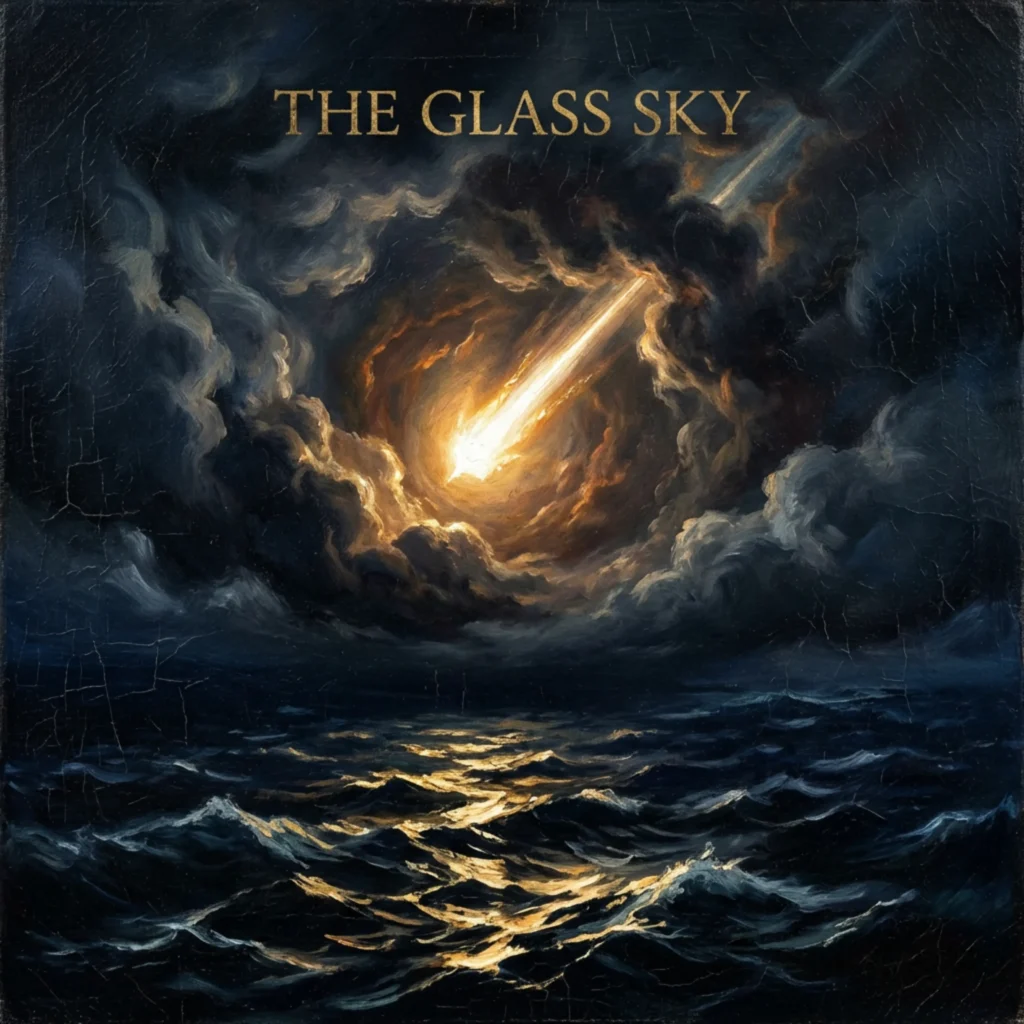
Requiem for a Falling Star — Track 5 of 5. Six minutes of cinematic ambient orchestral music, scored to a real-time nebula visualizer.
The Glass Sky
The record begins in the dark. “Prima Luce” captures the violent, mathematical snap of ignition—the moment a cold rock catches fire and wakes up. The harpsichord runs are precise, locking into a machine-like rhythm that refuses to slow down.
From there, we climb. “The Gilded Meridian” sits at the top of the arc. It is a slow, arrogant waltz, looking down at the blue world from a throne of heat. The string section swells and rolls, mimicking the feeling of being untouchable.
But the math goes wrong. “Discordia” introduces the error—a stumbling, uneven 5/4 rhythm where the brass section fights against the percussion. The structure holds, but the rivets are popping.
Then, the floor drops out. “Descent” is the sound of friction. The tempo accelerates as the air turns into a wall of fire. The violins scream in the high register, mimicking the heat shield burning away layer by layer.
It ends with “Requiem for a Falling Star.” The impact. The dust settling. The final realization that even the brightest things hit the ground.
No stock footage. Every star, drifting cloud, comet and distant galaxy you’re watching was generated live and rendered in sync with the track.
The last light scatters like dust through a cathedral window. Strings that once carried urgency now carry memory. Not mourning, not celebration — the residue of a life fully arced, settling into its own atmosphere. Beautiful and unflinching.
Requiem for a Falling Star is the closing movement. The arc has run its course, and what’s left isn’t wreckage — it’s residue. The tempo has given up its forward pull and settled into something more honest: the weight of what already happened.
The harmonies feel grounded rather than tense. There’s no resolution being reached for, no final surge. The orchestration breathes outward and then quietly thins, like light scattering into atmosphere rather than extinguishing. It’s a different kind of ending — not dramatic, not defeated. Just present.
ABOUT THE VISUALS — NEBULA LAB
Nebula Lab is a real-time WebGL visualizer I built under Output.GURU to give ambient music something to look like. The nebula clouds and aurora are tuned to react to the sound — the low end swells the clouds, the highs shimmer through the star field — while a lit planet turns quietly, a comet crosses now and then, and spiral galaxies drift far in the background. Nothing here is stock footage; it’s all made for this track, frame by frame.
▶ LINKS
More music & visuals: https://output.guru
Listen on SoundCloud: https://soundcloud.com/russellagrace/requiem-for-a-falling-star
Nebula Lab: https://output.guru/nebula-lab/
Licensing & IP notice: https://output.guru/licensing/
If cinematic ambient, orchestral twilight and deep-space visuals are your thing, subscribe — there’s more of this coming.
Written, produced and visualized by Russell Grace / Output.GURU.