
The Double-Edged Sword: AI in Cybersecurity — Defender and Attacker
 AI-Generated ImageAI-Generated Image
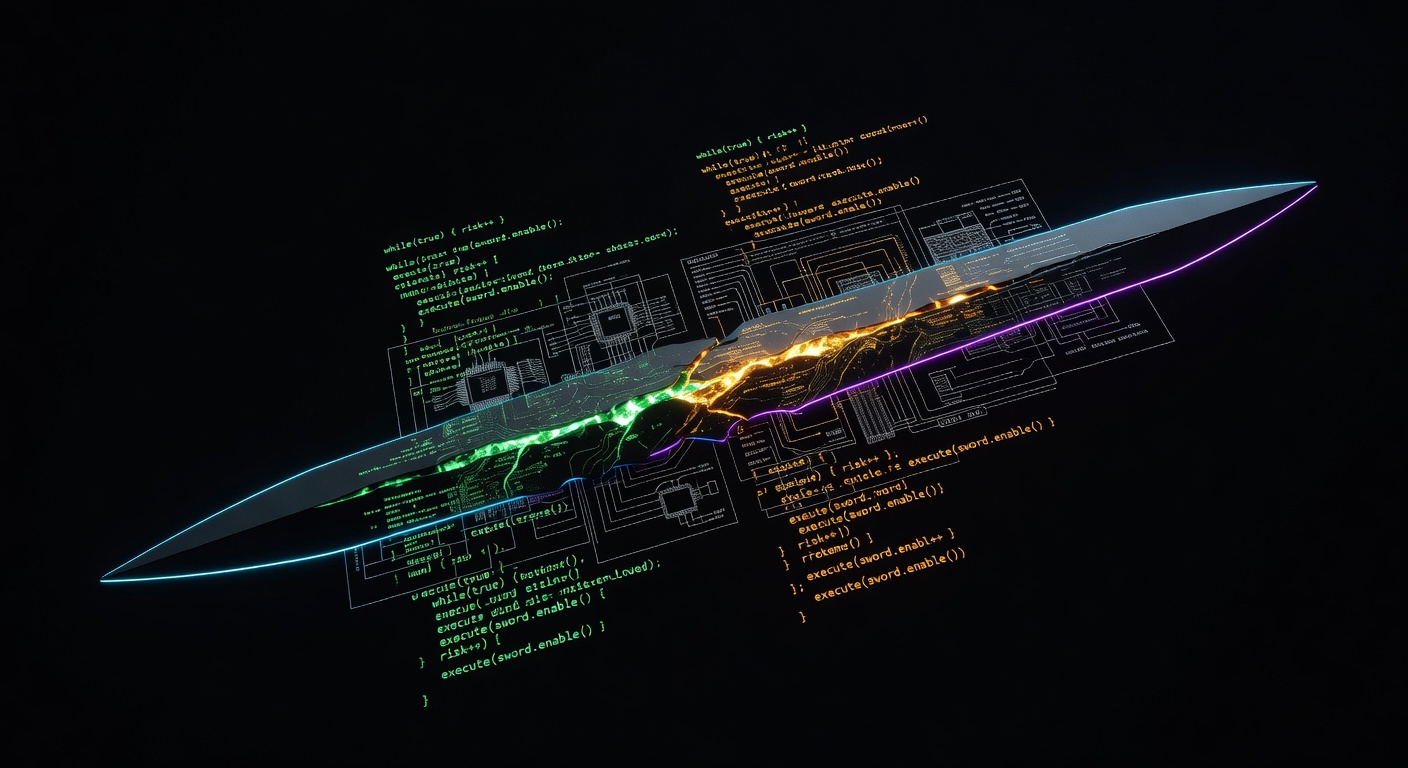
 Cybersecurity has always been an arms race — defenders building walls, attackers finding ways around them, and both sides adapting continuously. Artificial intelligence has accelerated this race to a pace that would have been inconceivable a decade ago. AI is simultaneously the most powerful defensive tool cybersecurity professionals have ever had and the most sophisticated weapon in the attacker’s arsenal. Understanding both sides of this equation is essential for anyone operating in the digital world.
The stakes are not abstract. A successful cyberattack can shut down hospitals, disrupt power grids, drain bank accounts, expose millions of personal records, and undermine democratic processes. The defenders tasked with preventing these outcomes are chronically understaffed, perpetually behind on patches, and drowning in alerts — many of them false. AI is transforming this landscape by giving defenders the ability to process information, identify threats, and respond to incidents at machine speed.
AI-Powered Defense
The most immediate application of AI in cybersecurity defense is threat detection. Traditional security systems rely on signatures — known patterns of malicious activity — to identify threats. This approach is inherently reactive; it can only detect threats that have been seen before. AI-based detection systems learn the normal behavior patterns of networks, users, and applications, and flag anomalies that deviate from these baselines. This behavioral approach can identify novel threats that signature-based systems would miss entirely.
Network traffic analysis benefits enormously from AI’s ability to process volume and detect subtle patterns. A security analyst might monitor hundreds of alerts per day, many of them false positives. An AI system can process millions of network events per second, correlating information across multiple data sources to distinguish genuine threats from benign anomalies. The result is not just faster detection but more accurate detection — fewer false positives consuming analyst time, and fewer genuine threats slipping through unnoticed.
User and Entity Behavior Analytics applies machine learning to the patterns of human behavior within an organization. How does a normal user access systems? What files do they typically open? What times are they active? When a compromised account begins behaving differently from its established pattern — accessing unusual systems, downloading large volumes of data, operating at unusual hours — AI systems can detect and flag the anomaly before significant damage occurs.
Automated Response and Orchestration
Detection without response is observation without action. Security Orchestration, Automation, and Response platforms use AI to not only detect threats but to initiate automated responses. When a threat is identified, the system can isolate affected systems, block malicious IP addresses, disable compromised accounts, and initiate forensic data collection — all within seconds, without waiting for a human analyst to evaluate the alert and decide on a response.
The speed advantage of automated response is critical. The time between initial compromise and data exfiltration — the attacker’s dwell time — has been decreasing steadily. In many modern attacks, data is stolen within hours or even minutes of initial access. Human response times, measured in hours or days, are simply not fast enough. AI-driven automation closes this gap, responding at machine speed to contain threats before they propagate.
The Attacker’s AI
It would be naive to discuss AI in cybersecurity without acknowledging that attackers have access to the same technology. AI-powered attacks are becoming more sophisticated, more targeted, and more difficult to detect. Automated phishing campaigns use AI to generate convincing emails tailored to individual recipients, incorporating information gleaned from social media and professional profiles. The days of obvious phishing emails with poor grammar and generic content are giving way to highly personalized messages that even security-aware recipients might find convincing.
AI-powered malware can adapt its behavior to avoid detection, modifying its code, communication patterns, and execution timing to evade the very behavioral analysis systems designed to catch it. This creates an adversarial dynamic where defensive AI and offensive AI are engaged in continuous adaptation, each learning to counter the other’s latest techniques.
Deepfakes and synthetic media represent another offensive application of AI in cybersecurity. Voice cloning can be used to impersonate executives in business email compromise schemes. Video deepfakes can be used for social engineering. Synthetic text generation can produce convincing disinformation at scale. The ability to generate realistic fake content undermines trust in digital communication and creates new attack vectors that traditional security measures are not equipped to handle.
Vulnerability Discovery and Penetration Testing
AI is transforming the offensive security discipline of penetration testing — the practice of simulating attacks against systems to identify vulnerabilities before real attackers exploit them. AI-powered scanning tools can identify potential vulnerabilities more quickly and comprehensively than manual testing, covering larger attack surfaces and identifying subtle weaknesses that human testers might overlook.
Automated vulnerability discovery using AI techniques like fuzzing — feeding random or semi-random inputs to programs to trigger unexpected behavior — has become significantly more effective with machine learning guidance. AI can learn which types of inputs are most likely to trigger bugs in specific types of software, focusing testing effort where it is most likely to yield results.
The Human Element
Despite the increasing sophistication of AI in cybersecurity, the human element remains critical. AI systems can detect patterns and automate responses, but they cannot understand the business context that determines whether an anomaly is a threat or a legitimate but unusual activity. They cannot navigate the political and organizational dynamics of incident response. They cannot make the judgment calls required when the best technical response conflicts with business requirements.
The most effective cybersecurity programs combine AI’s processing power and speed with human judgment, creativity, and contextual understanding. AI handles the volume and velocity of modern threats; humans handle the complexity and ambiguity. Together, they create a defensive capability that neither could achieve alone.
At Output.GURU, this category will explore the full spectrum of AI in cybersecurity — the defensive tools that protect our digital lives, the offensive capabilities that threaten them, and the evolving strategies that navigate the space between. In a world where every organization is a potential target and every individual’s data has value, understanding AI’s role in cybersecurity is not optional — it is essential.