Transmissions From Beyond: The Alien Gallery Collection
 AI-Generated ImageAI-Generated Image
 What does intelligence look like when it evolves under a different star? Not the rubber-suited humanoids of low-budget science fiction or the conveniently bilingual aliens of television — but genuinely alien life, shaped by physics and chemistry that operate under the same universal laws but in environments utterly unlike Earth. This is the question that drives the Alien Gallery, and artificial intelligence gives us a tool for exploring it that no previous medium could match.
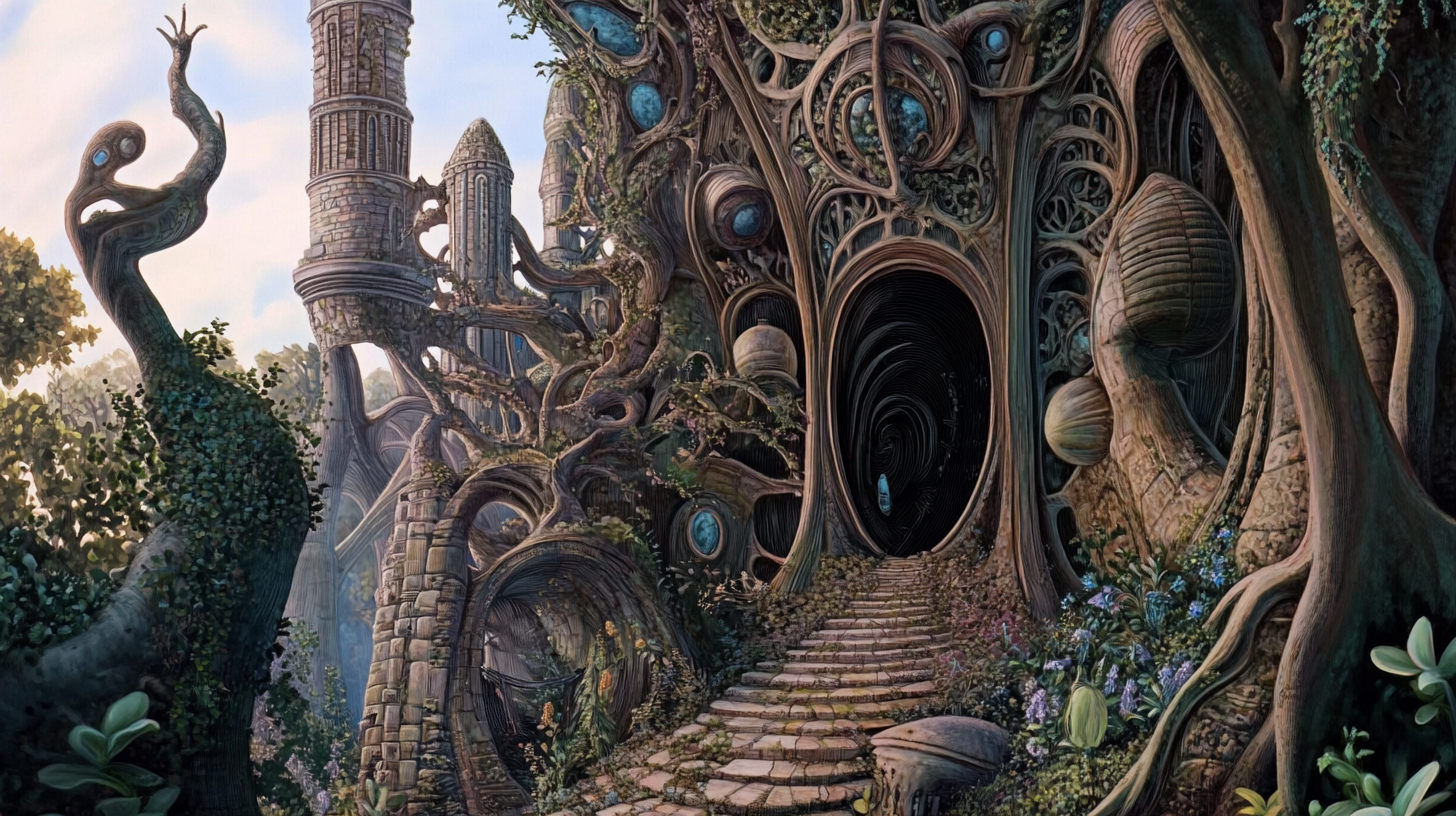
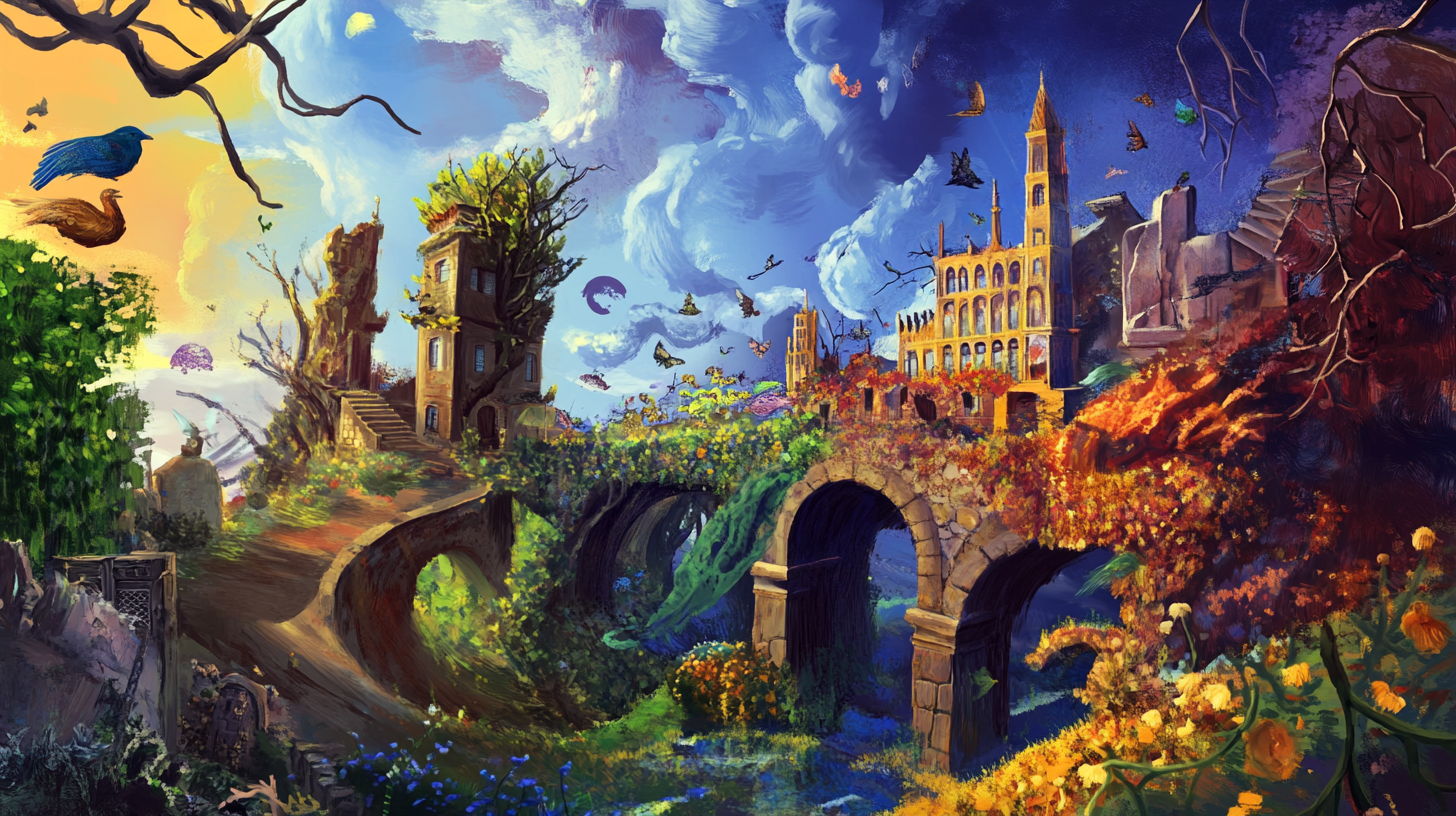
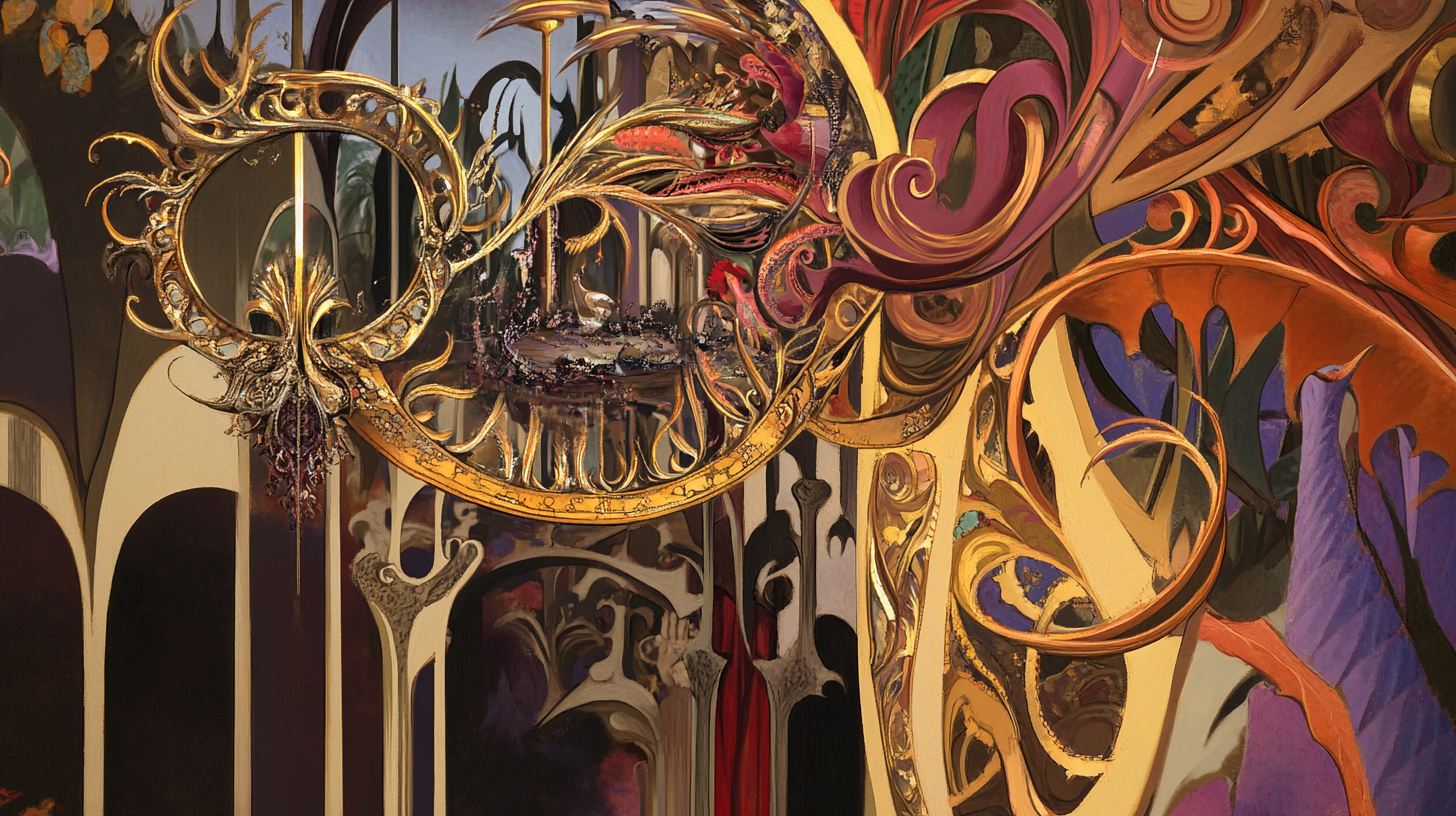
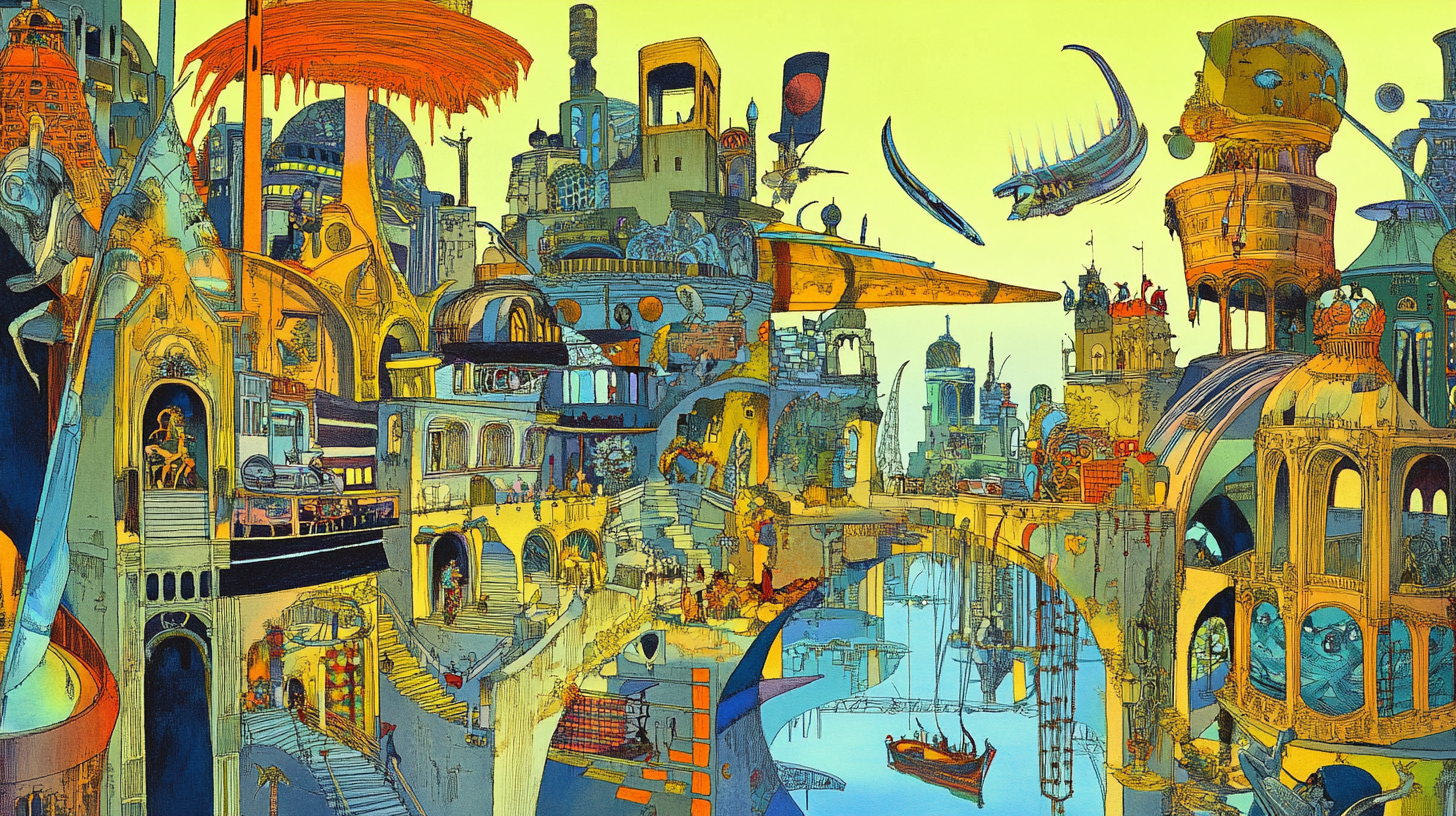
The Alien Gallery is a collection of AI-generated visualizations of extraterrestrial life forms, vessels, architectures, and worlds. Each image is accompanied by speculative lore — the biological logic, the environmental pressures, the technological pathways that might produce the forms we see. This is not science in the strict sense; it is imagination informed by science, using AI’s capacity for visual generation to explore possibilities that exist at the intersection of biology, physics, and creative speculation.
The Design Philosophy
The guiding principle of the Alien Gallery is plausibility over familiarity. Alien life should look alien — not like Earth creatures with minor modifications. The visual explorations here draw on real principles of evolutionary biology, extremophile research, and planetary science to create forms that could, in some distant corner of the universe, actually exist.
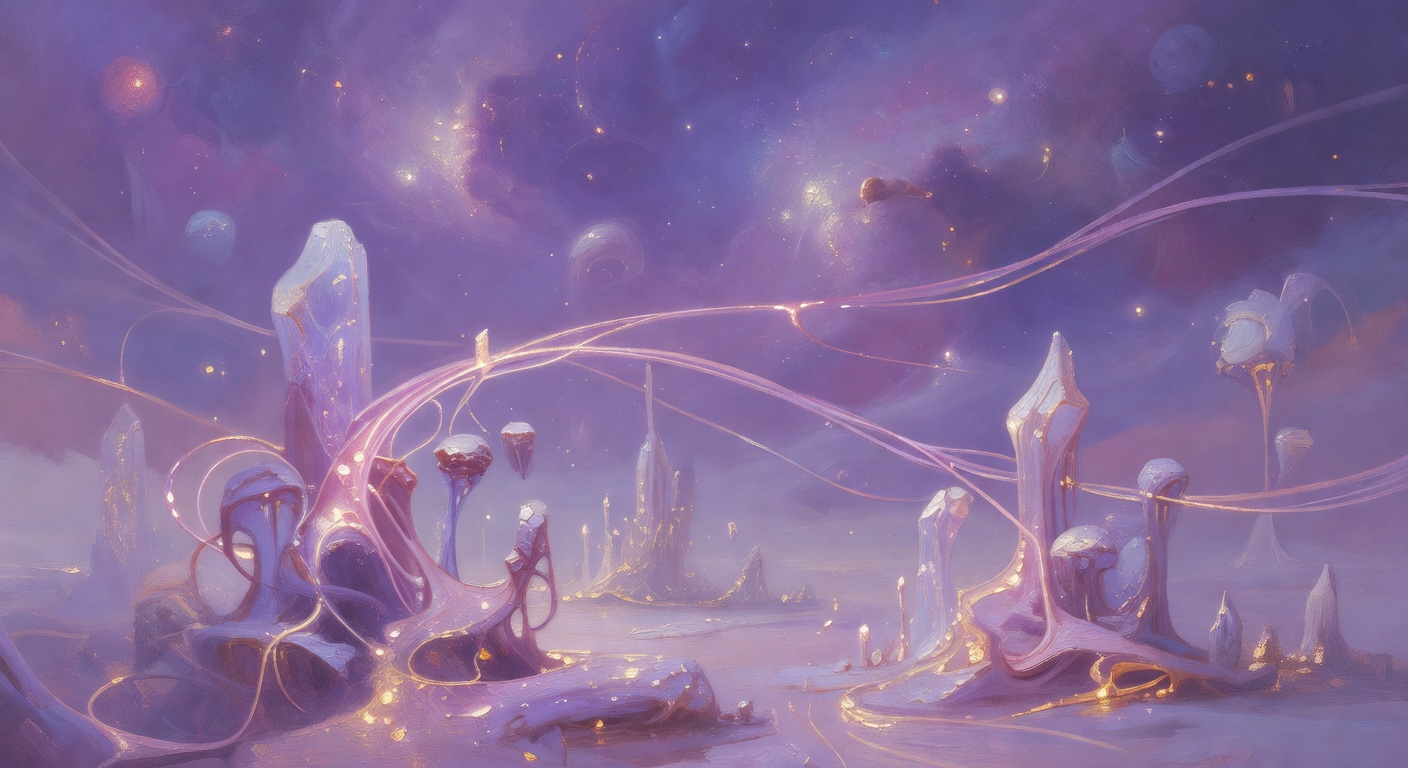
Silicon-based biochemistry produces organisms with crystalline structures and electromagnetic sensitivity rather than the soft, water-based forms familiar from Earth biology. High-gravity worlds produce organisms that are low, broad, and structurally robust. Methane oceans host swimmers with chemical receptors tuned to molecular signatures we cannot detect. Tidally locked planets produce organisms that have evolved for the permanent boundary between scorching light and eternal darkness.
These are not random fantasies — they are extrapolations from known science, rendered visible through AI image generation and refined through iterative creative direction. The scientific grounding gives the images their power: they feel possible in a way that purely fantastical designs do not.
Life Forms
The organisms in the Alien Gallery range from microscopic to planet-spanning, from solitary to hive-minded, from predatory to symbiotic. Each is designed within the constraints of its imagined environment — adapted to the gravity, atmosphere, radiation, temperature, and chemistry of its home world.
Bioluminescent organisms evolved in lightless deep-ocean environments use chemical light for communication, predation, and mating display. Their forms are baroque and beautiful, shaped by sexual selection in a world where appearance is the primary means of information exchange. The AI renders these organisms with an ethereal quality that captures both their biological logic and their otherworldly beauty.
Hive organisms that share consciousness through chemical or electromagnetic networks challenge our assumptions about individuality and intelligence. Their “bodies” are distributed — hundreds or thousands of specialized units that function as a single organism, like the cells of a body scaled up to the level of visible creatures. The visual challenge of representing distributed intelligence is one that AI approaches with surprising creativity.
Technology and Architecture
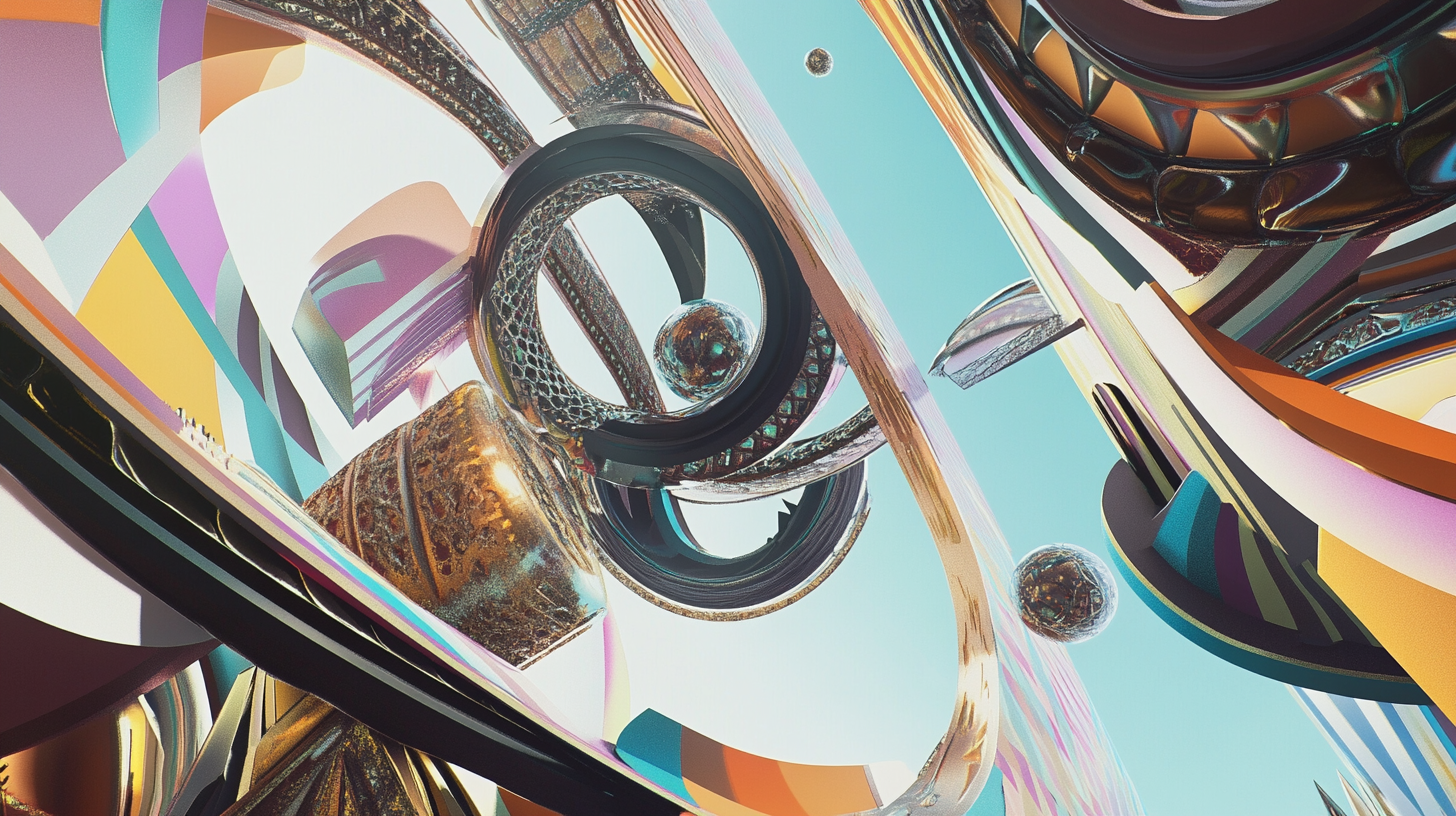
Alien technology, if it exists, would reflect the biology and psychology of its creators as much as its physical function. An aquatic species would develop technology adapted to fluid environments — pressure-resistant, streamlined, and communicating through acoustic rather than visual interfaces. A gaseous species inhabiting a gas giant’s atmosphere might develop technology that is lighter than air, powered by atmospheric chemistry, and structured around principles of buoyancy rather than structural rigidity.
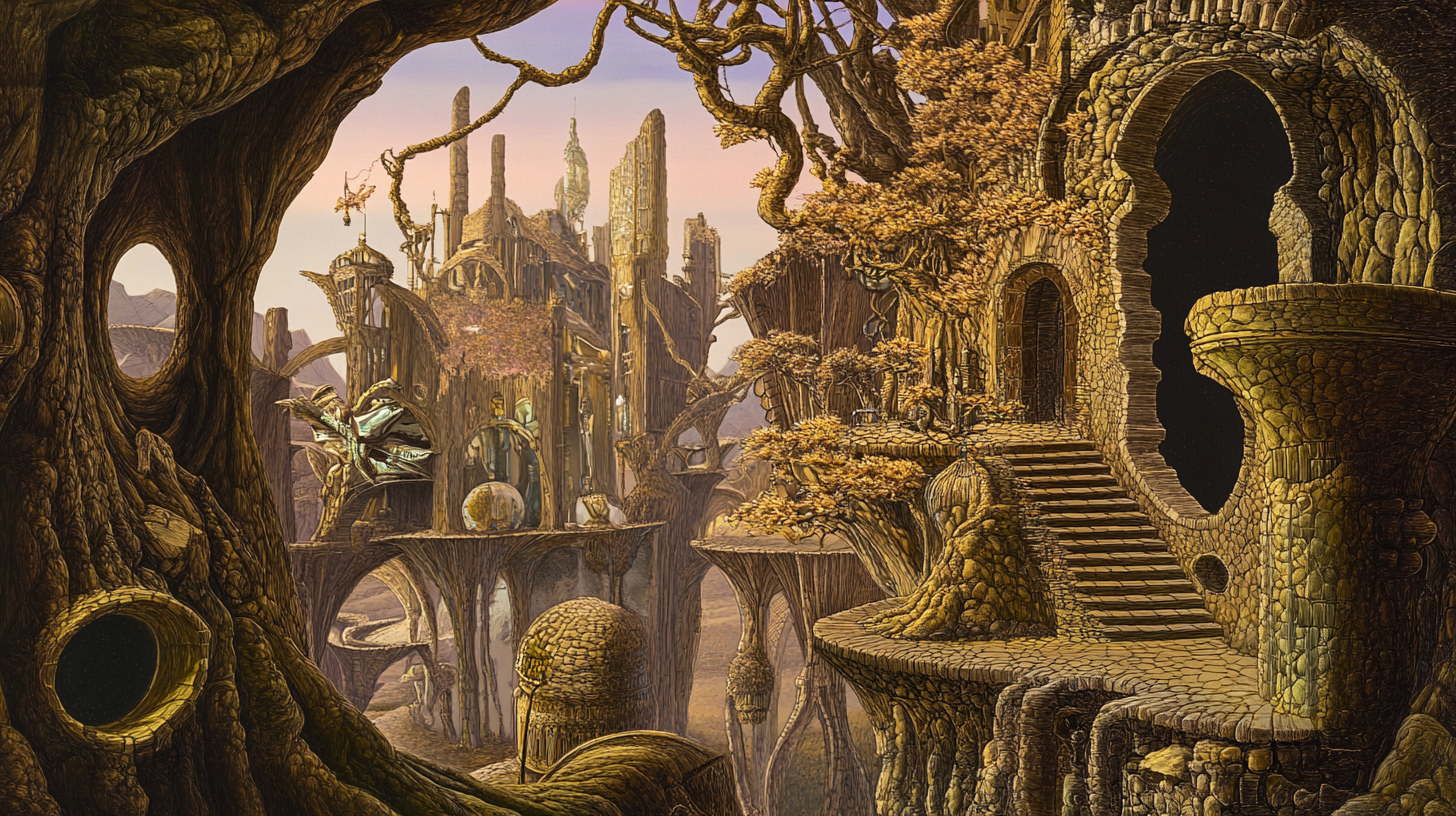
Alien architecture follows the same logic. The built environments of species that perceive different electromagnetic frequencies would be designed for visual experiences we cannot see. Species with different relationships to gravity would build in orientations and proportions that feel wrong to human eyes but perfectly logical to their inhabitants. The AI generates these architectures by combining descriptions of environmental constraints with creative direction about aesthetic principles, producing structures that feel simultaneously logical and deeply unfamiliar.
Worlds and Environments
The environments that host alien life are as important as the life itself. Each world in the Alien Gallery is imagined with attention to the physical conditions that would shape its biosphere — star type, orbital characteristics, atmospheric composition, geological activity, and presence of liquid solvents. These conditions determine everything: the color of the sky, the nature of the landscape, the rhythm of day and night, and the evolutionary pressures that shape life.
A world orbiting a red dwarf star sees a sky that is perpetually sunset-red, with vegetation adapted to absorb the star’s peak radiation frequencies rather than reflecting them. A tidally locked world has a permanent day hemisphere, a permanent night hemisphere, and a twilight zone where the most complex life concentrates. A world with a dense, high-pressure atmosphere produces life forms that float rather than walk, existing in a three-dimensional ecology that has no true ground.
The Ongoing Collection
The Alien Gallery is a living collection that will grow over time. Each addition brings a new world, a new biology, a new technology, a new way of imagining what intelligence and life might look like beyond the boundaries of our own experience. The combination of scientific speculation with AI visualization creates a unique creative space — one where imagination is grounded in physics and rendered in images that make the unimaginable visible.
This is more than art for art’s sake. Speculating about alien life is a way of understanding our own — recognizing the contingency of our biology, the arbitrariness of our sensory experience, and the vastness of the possibility space in which Earth life represents a single, extraordinary but not unique, solution. The Alien Gallery is a window into that possibility space. Step through it.